Relationships with
|
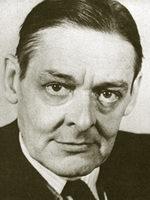
Photo Credit: T.S. Eliot's picture is courtesy of Michigan State University. Photographic illustrations of T.S. Eliot are copyright © by their respective holders. The images are published with permission or as allowed by the copyright law's fair use or quotation provisions. If any copyright holder objects to an image being included, please notify us and it will be removed immediately. |
|||||||||








While some aspects are more suited to experienced astrologers, you will find a lot of fascinating topics that may sway you from any conservative views you may have about relationships.
And now, you can also get your own report, just like the ones we prepared for all the famous people on our database.
There are also many other interesting forums just waiting for you to discover.
You can also learn in great detail how they handle their relationships and other aspects of their lives, and what makes them tick.
Enjoy your reading and help to further boost the FAQ section by posting your questions and comments.
This ancient saying is also true when it comes to our love-, business-, and other relationships.
This is why we are here; to make the most of ourselves, a courageous choice that enhances all aspects of life, relationships included.
So come and join us, your friends who respect your imperfections, love your resolute, and embrace you for the wholesome being that you are!
With this free yet powerful tool, you will also understand what types of relationships are most likely to work for you and your partner.
The report also features your RQ (Relationship Quotient) score for the most common types of relationships, such as love, business, friendship, intellectual, sensual, etc.
Dr. Brenda Shoshanna - our anchor author and a world-renowned relationships psychologist - offers you the benefit of her vast professional experience.
We seek more articles about more topics by more authors. Are you the one or know of any?
There is a special section dedicated to relationships in the new age: astrology, psychic, tarot, dreams, spells, etc.
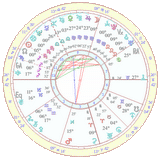
Disclaimer: This information about T.S. Eliot is derived from astrological interpretation of T.S. Eliot's date, time, and place of birth.