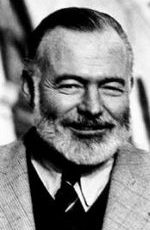
Ernest Hemingway
drive and ambition
He is a perfectionist and has high standards for his own work. Ernest Hemingway often feels that if he wants something done right he must do it himself, for others do not do as thorough a job as he does. Doing a task well is very important to him, and he may labor over minute details that others would not bother with. Ernest Hemingway strives for accuracy, efficiency, and precision, and he becomes very irritable when things are not done "right".
On the other hand, Ernest Hemingway can become so much of a perfectionist and so self-critical that he will not even attempt many activities and projects, feeling that his efforts will simply not be good enough. He is usually modest and realistic in assessing what he can accomplish and, if anything, Ernest Hemingway underestimates himself. Of course, practice makes perfect, and if Hemingway does apply himself diligently in some area, he gradually gains self-confidence as he master skills and develop expertise.
Ernest Hemingway conserves his energy and paces himself so that he does not waste or diffuse his efforts. An unwillingness to take risks or venture from the beaten track can sometimes limit his opportunities. In short, Hemingway may not aim high enough and settle for too little in life.
He is a doer and an achiever. Energetic, courageous, and often impatient, Ernest Hemingway will forge ahead with his plans regardless of others' reservations. In fact, Hemingway often feels other people get in his way and he prefers working on his own. Ernest is active, assertive, and rather competitive as well.
Hemingway works hard and patiently to achieve his objectives, persevering and continuing on in spite of difficulties and discouragement. Concentrating on a single, clearly defined goal, Ernest is able to accomplish much, but he often feels that the way is long and arduous, and that he must struggle on alone, that it is all on his shoulders.
He is capable of great self-control and self-denial and can be a hard task master, expecting far too much of his. He also tends to hold himself back, to doubt his own power and ability. Ernest Hemingway feels that he meets with great resistance whenever he tries to assert himself or take initiative. Anger and frustration can be big problems for Ernest Hemingway, especially when he tries to work with other people or depend too much on others for support. Ernest works best in solitude.
Ernest Hemingway has a powerful will and when he wants something, he pursues it passionately and relentlessly until he achieves it. He may be so driven by his desire that he loses all objectivity. Ernest Hemingway often becomes compulsive, even obsessed, with doing or achieving something, no matter what the costs or how hard he must work for it. His forcefulness may be veiled or subtle, for often he does not reveal his real aims and intentions to others until they cross him. Intense power struggles and relationships with a strong dominance/submissiveness theme are likely. Ernest has enormous energy reserves, and is capable of extraordinary effort and great achievement if he uses his energies for constructive purposes.
Ernest Hemingway puts his heart and soul into everything he does. He is very industrious and usually acts according the way he feels. Ernest Hemingway learns through his emotions and it is important that he trust his feelings and his hunches.
Because of his somewhat negative attitude, Ernest could feel listless a great deal of time and is likely to become physically inactive. Ernest Hemingway tends to become easily overwhelmed; his objectives tend to be unclear, and Hemingway questions his ability to attain them.
In order to achieve his ambitions in life Ernest Hemingway may well feels that he must make a significant break from his personal past, especially the influences of his childhood environment, his family relationships, or familial traditions. Hemingway is apt to be the black sheep, or the one who left home and never really returned.
What Ernest Hemingway wants to do in life may seem "off the wall" or "way out in left field" to some people.
Ernest wants very much to be in a position to be able to positively influence and help many people. However, he may believe that he has to sacrifice his idealism or convictions in order to attain his ambitions. At times his desire for prominence, popularity, or stature may make Ernest Hemingway do things that put him in a dubious situation with his superiors.
Astrological factors in this Astro Profile section:
Mars in Virgo
Mars in 1st house
Mars Square Saturn
Mars Square Pluto
Mars Opposition Moon/MC
Mars Conjunct Saturn/Neptune
Uranus Opposition MC
Jupiter Quincunx MC

|