George W. Bush
motivation
Behind Bush's strong, proud appearance (described in the previous chapter), there is a much tender, sensitive, sentimental, feeling person. He is probably much shyer and more private than anyone would realize from his initial impression.
George has powerful emotional attachments to the past, his family, his childhood, places he associates with safety and security, and his beginnings. Maintaining a connection with his roots and heritage and keeping family bonds strong are very important to Bush. Loyal, devoted, and sentimental, Bush tends to cling to whatever is dear to him, be it person, familiar place, or cherished possession.
He is sympathetic, nurturing, supportive, and very sensitive to the emotional needs of other people. George likes to be needed, to care for others, and he often worries about the people he loves. George W. Bush has a very strong need for a sense of belonging and acceptance, and he centers much of his life on his home. He is more concerned about people and their feelings than with power, achievement, or position in society. Kindness, consideration, and tenderness impress George W. Bush more than any sort of honor the world can bestow.
He is primarily emotional and his views are often dominated by his feelings and by his own personal, subjective experiences, rather than reason, logic, or abstract principles. It is difficult for him to judge situations in a fair, objective manner for his personal sympathies and loyalties usually enter in. George W. Bush takes things very personally, and sometimes builds a wall around him to protect himself from pain and rejection. George W. Bush feels rather shy and vulnerable at heart. He also tends to be moody, experiencing frequent emotional ups and downs. George W. Bush needs to have a place and time in his life to withdraw, introspect, dream, and replenish himself; otherwise George W. Bush becomes cranky and unhappy with those around him.
George W. Bush functions in an instinctive, non-rational manner and likes to immerse himself in creative activities where he can express his feelings, imagination, and instincts. Bush often loves to cook, since it can be both creative and a way to nurture and nourish others. George W. Bush also has a great affinity for music, because it evokes and communicates feelings that may be difficult or impossible to put into words.
His compassion, sensitivity, and imagination are Bush's strong points. His faults include an inability to release the past and go forward, clannishness and prejudice, and a tendency to be self-pitying when he meets hardships in life.
George W. Bush tends to get involved in the helping professions or in activities where his efforts are hidden, behind the scenes, unacknowledged, or unknown to the public. Asserting himself or getting up in front of an audience may be exceedingly uncomfortable for Bush.
George W. Bush often feels that he is at cross purposes with himself, for his conscious intentions and desires conflict with his subconscious emotional needs and drives. He is pulled in two different directions. George has difficulty satisfying both his need to be an individual and his need for caring relationships and a sense of belonging. Also, George sends out mixed messages so people do not always know how to respond to him or know what George really wants, thus creating confusion or conflict in close relationships.
George has big aspirations and the desire to succeed in life in a grand way. George W. Bush tends to exaggerate, to promise more than is possible, and to misjudge through being overly optimistic. However, he never loses his hopes for the future. Restlessness and discontent with responsibilities and limitations in life can be troublesome for Bush.
He may be a bit high-strung and over-zealous in the pursuit of his endeavors. Bush always seems to be in a hurry and has the ability to evaluate situations quickly. George W. Bush has a brilliant mind and possibly could invent something.
George W. Bush has a strong need for intellectual relationships and associations and he likes to share his intellectual interests with others. This could be in meetings or by joining various clubs and organizations.
George W. Bush has a great desire for freedom and independence and is subject to strong emotional tensions. He is very creative and forges ahead tirelessly. But Bush tends to make the highest demands on his physical energy and is prone to over-stimulate his nerves.
George W. Bush has a restless and somewhat nervous manner and he attracts attention through his initiative and originality. He is drawn to unusual friends and acquaintances, and because of his confidence may be regarded as a leader in his sphere.
It could be hard for George W. Bush to face up to his mistakes because of his insecurity and self-doubt. His early years may have been undermined by poor relationships with one or both of his parents who may have been ill, weak or alcoholic.
George W. Bush loves to entertain and likes to cultivate social contacts. He enjoys forming close personal relationships with others and most of them should be harmonious. George prefers teamwork rather than separate efforts to realize his goals.
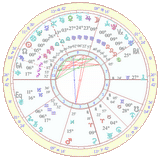
Astrological factors in this Astro Profile section:
Ascendant in Leo and Sun in Cancer
Sun in Cancer
Sun in 12th house
Sun Square Moon
Sun Square Jupiter
Sun Conjunct Mercury/Uranus
Sun Conjunct Mercury/N. Node
Sun Conjunct Uranus/Pluto
Sun Conjunct Uranus/Asc.
Sun Conjunct Neptune/MC
Sun Conjunct N. Node/Asc.

|