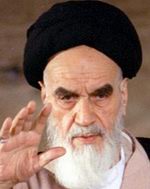
Ayatollah Khomeini
challenges and difficulties
Ayatollah Khomeini has a great capacity for self-denial in the pursuit of a long-range goal. Ruhollah is capable of hard work and persistent labor, but he may lack joyfulness and the ability to play. Ayatollah Khomeini often feels burdened by life's demands and responsibilities, and may envy those who seem to attract what they want in life without a great deal of personal effort.
There is a very judgmental, stern, and uncompromising side of Khomeini's which may inhibit him a great deal. Ayatollah Khomeini must avoid becoming heavy and cynical, or becoming a rather callous, sophisticated adult whose practicality and realism squeeze out the playful, imaginative side of life.
His childhood or his relationships with his parents was restrictive, unloving, or unhappy in ways that may prevent Ruhollah from allowing other people to get close to him in later life. Ayatollah Khomeini felt deprived in some manner, whether or not he actually was deprived in some way. Emotional separations or repression of his needs and feelings may typify his early life, at least as Khomeini remembers it. Forgiving his parents and/or letting go of any resentments he has about the limitations that he experienced early in his life is crucial. Also, Ayatollah Khomeini needs to build his own solid foundation, and investing time and energy into his home, domestic relationships, and inner life can help Ruhollah accomplish this.
Basically shy, Khomeini tends to be somewhat inhibited in love relationships and may feel uncomfortable or awkward expressing his love for someone. Ayatollah Khomeini longs for love relationships and dreams about love, but he is also inclined to torment himself because of a seeming lack of affection.
Now we will discuss patterns of behavior which Ayatollah Khomeini instinctively and habitually reverts to when under stress - a mostly subconscious process that he is apt to over indulge in because it is so familiar and hence easy for him. The direction Ayatollah Khomeini needs to follow in order to develop balance, greater awareness, and wholeness is also described.
It is easy for Ayatollah Khomeini to become distracted from his path by the multitude of interesting choices, possibilities, and options available to him. Ayatollah Khomeini needs to develop single mindedness and focus. Until Ruhollah directs his attention to some of the big questions, such as "What is my life's purpose?" "What is really important to me and essential to my happiness?", he is apt to dabble, scatter his energies in many directions and engage in activities which are entertaining but ultimately neither fruitful nor enriching.
Having an overall vision for his life and aligning his daily activities so that they support rather than detract from Khomeini's larger purpose in life, is a significant step toward his personal development.
It is in his way of thinking, processing information and communicating that Ayatollah Khomeini is most likely to wrestle with these issues. In Khomeini's relationships with neighbors, colleagues, and acquaintances, he needs to try to bring out the qualities described above.
The specific habits which are likely to hold Ayatollah Khomeini back, or which he is prone to overdo, especially during stressful periods, include:
Staying in relationships with domineering, controlling, abusive people or being manipulative. Ruhollah sometimes abuses his own power to use others to his own selfish ends.
The following are specific activities that will support Ayatollah Khomeini in his growth. These may or may not feel natural to Khomeini, and he may initially resist or feel awkward about them, but they are crucial to his path to wholeness.
Ayatollah Khomeini should develop faith and confidence both in himself and in a higher power that can guide, nourish, and help him. He needs to expand his willingness to dream and envision better things in life by studying religion, philosophy and other subjects that enable him to acquire a larger, more inclusive view of the world.
Being generous with his time, energy and resources in helping others achieve a better life will in turn benefit Ayatollah Khomeini.
Ayatollah Khomeini should be willing to become more of a free thinker, to experiment and change, to loosen his ties to tradition and the known and to allow for new developments. He needs to practice getting involved in an area involving new techniques, rapid changes and innovation. Ruhollah can be part of the avant-garde promoting such changes - be it in science, music or social relationships. Ayatollah Khomeini has to be willing to be different and perhaps to be considered eccentric or odd.
Ayatollah Khomeini tends to feel inferior and his attitude in the presence of others could be a bit negative or weak. He is inclined to shy away from groups and would be a rather quiet and passive member of an organization or association.
He is very social, loves artistic events and entertainment, and has the ability to show his feelings without reservation. Ayatollah Khomeini probably found joy in learning things early in life and he keeps in close relationships with his family and other relations.
Astrological factors in this Astro Profile section:
Saturn in Capricorn
Saturn in 4th house
Saturn Opposition Venus/Neptune
N. Node in Sagittarius
N. Node in 3rd house
N. Node Opposition Pluto
N. Node Conjunct Jupiter
N. Node Conjunct Uranus
N. Node Opposition Sun/Neptune
N. Node Opposition Mercury/Venus

|